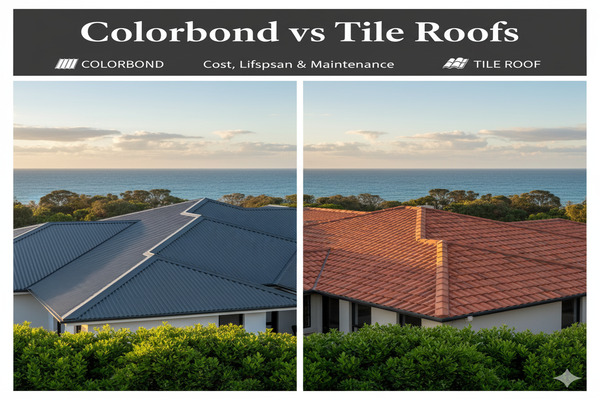
Choosing a new roof is one of the most important decisions in any home build or renovation. The material you select affects the cost, durability, energy performance, and even the style of your home. Across Sydney and the rest of Australia, the two most common roofing types are Colorbond steel and tile roofs.
Each option has strong advantages, but they perform differently depending on your budget, location, and long-term goals. This article explains everything you need to know about how these two roofing systems compare — from installation and cost to maintenance and lifespan.
Understanding the Two Roofing Systems
Both Colorbond and tile roofs are designed to protect your home from heat, rain, and wind, but they do so in very different ways. Understanding these differences helps you make an informed decision.
Colorbond roofs are made from coated steel sheets designed for strength, durability, and low maintenance. Roof tiles, on the other hand, are made from either concrete or terracotta, offering traditional looks and heavy thermal mass. Both materials can perform well when installed correctly, but they cater to different needs and preferences.
Design and Material Overview
Roof materials affect how a structure handles weather, weight, and sound. The choice between metal and tile begins with understanding what each system is made of and how it is installed.
What Is a Colorbond Roof?
A Colorbond roof is made from pre-painted steel sheets manufactured by BlueScope Steel. Each sheet includes multiple protective layers: a metallic base coat for corrosion resistance, a pre-treatment layer to improve adhesion, and a baked-on colour finish for durability.
The sheets are lightweight and designed to fit tightly using concealed or exposed fasteners. Their strength-to-weight ratio makes them ideal for large spans and modern home designs. Colorbond is also available in various profiles like corrugated or Klip-Lok, allowing architects to match function with aesthetics.
What Is a Tile Roof?
Tile roofs come in two main types — concrete and terracotta. Concrete tiles are made from sand, cement, and water, while terracotta tiles are made from kiln-fired clay. Both are installed on battens using overlapping rows, providing a natural barrier against rain and sun.
Tile roofs are heavier than steel, but they deliver classic style and excellent acoustic insulation. Each tile can be replaced individually, making repairs straightforward when damage occurs.
Cost Comparison: Upfront and Long-Term
Roofing costs vary widely depending on material, design complexity, and labour. Understanding both upfront and long-term expenses helps prevent surprises later.
Installation Costs
Colorbond roofs generally have lower installation costs than tile roofs. Because steel sheets cover large areas quickly, labour time is reduced. For a typical Sydney home, Colorbond installation ranges from $50 to $80 per square metre, depending on roof design and profile.
Tile roofs are more labour-intensive. Each tile must be laid individually, and the structure must support the extra weight. Concrete or terracotta tiles may cost $80 to $120 per square metre, plus additional framing costs.
Maintenance Costs
Over time, maintenance plays a major role in total cost. Colorbond requires minimal upkeep beyond occasional cleaning to remove debris and salt build-up.
Tile roofs need more frequent inspections because tiles can crack, move, or develop moss growth. Ridge caps may also need re-bedding or re-pointing every decade. While tile repairs are simple, they can become expensive if ignored for long periods.
Long-Term Value
A Colorbond roof can last several decades with minimal maintenance, keeping total ownership costs lower. While tile roofs can also last for decades, their maintenance and structural requirements make them slightly more expensive over time.
For long-term value, the decision often depends on your local conditions and willingness to maintain the roof regularly.
Lifespan and Durability
A roof’s lifespan depends on material quality, installation, and the local environment. Sydney’s mix of coastal air, humidity, and strong sun demands materials that handle stress and temperature variation.
Expected Lifespan of Colorbond Roofs
Colorbond steel is built to last. With modern coatings, it resists corrosion, peeling, and fading for 40 to 70 years. Its surface is engineered to withstand ultraviolet radiation and rainwater exposure.
In coastal regions, the Ultra and Stainless ranges are recommended to resist salt damage. Regular washing every six months helps extend its lifespan. Colorbond’s lightweight structure also means less strain on the building frame.
Expected Lifespan of Tile Roofs
Concrete tiles can last around 50 years, while terracotta tiles often exceed 70 years with proper care. Their baked finishes resist fading, and they perform exceptionally well in fire-prone areas.
However, tiles can crack from impact or movement and may require occasional replacement. The underlayment and ridge mortar often wear out faster than the tiles themselves, meaning periodic re-pointing is necessary.
Performance in Sydney’s Climate
Sydney’s coastal humidity and salt exposure favour Colorbond for homes near the sea, provided you choose corrosion-resistant coatings. Tiles remain popular in inland and suburban areas, where heavy rain and wind are common.
Both materials can perform well, but maintenance consistency often determines longevity.
Weight, Structure, and Noise Factors
Roofing weight and acoustic performance are often overlooked but critical to comfort and cost.
Roof Weight and Framing Requirements
Tile roofs are much heavier than metal roofs, often weighing up to 60 kilograms per square metre. This means roof framing must be stronger, increasing structural costs. Colorbond, at just 5 to 10 kilograms per square metre, places far less load on the frame.
For renovations, replacing old tile roofs with Colorbond can reduce stress on the structure and simplify reinforcement requirements.
Sound and Thermal Performance
Tiles provide superior sound insulation, reducing rain and outside noise. Colorbond roofs, while noisier in heavy rain, can be quietened with insulation blankets or ceiling batts.
Thermally, tiles hold heat longer, releasing it slowly in the evening. Colorbond reflects heat efficiently when using light colours or reflective coatings, helping reduce cooling costs.
Aesthetic Appeal and Design Flexibility
Appearance often plays a major role in roof selection, especially for homeowners focused on street appeal.
Appearance and Style Options
Colorbond roofs come in more than 20 colours, ranging from neutral greys and creams to bold blues and reds. The smooth finish and clean lines give a modern look that suits contemporary architecture.
Tiles, in contrast, offer natural texture and traditional charm. Terracotta tiles develop rich patina over time, while concrete tiles can mimic slate or stone finishes. The choice between the two depends largely on the home’s design style.
Suitability for Different Home Styles
Modern or coastal homes often use Colorbond for its sleek profile and ability to complement minimalist architecture. Heritage or Mediterranean-style homes usually prefer tile roofs for their warmth and character.
Architects frequently combine both materials — Colorbond for extensions or flat sections, and tiles for pitched or visible rooflines — to balance function and aesthetics.
Maintenance Requirements
Maintenance influences both lifespan and long-term costs. Some materials are easier to care for than others.
Maintaining Colorbond Roofs
Colorbond roofs are low-maintenance. Washing with clean water removes dirt and debris, and gutters should be cleared twice yearly. Check for scratched or exposed areas, especially around fasteners, to prevent rust.
Coatings maintain colour stability for decades, and modern formulations resist chalking and fading even in high-UV areas.
Maintaining Tile Roofs
Tile roofs require more hands-on maintenance. Broken tiles must be replaced promptly to prevent leaks. Ridge capping and bedding should be inspected regularly, as cracks in mortar can lead to water ingress.
Moss and lichen can grow on tiles in humid suburbs, requiring periodic cleaning. Pressure washing and re-coating extend both the appearance and lifespan of tile roofs.
Environmental Impact and Sustainability
Environmental performance is increasingly important for homeowners and builders.
Recyclability and Manufacturing Impact
Colorbond steel is 100% recyclable, and its manufacturing process uses less energy than concrete or clay tiles. At the end of its life, the steel can be repurposed without loss of quality.
Tile production consumes more energy during firing or curing, but tiles last longer and are made from natural materials. Concrete tiles have a larger carbon footprint than terracotta because cement production releases more emissions.
Energy Efficiency and Heat Reflection
Colorbond’s reflective surface helps reduce heat absorption, lowering energy use for cooling. Light colours improve this effect further. Tiles, with their heavier mass, absorb and release heat slowly, which can be beneficial in cooler or shaded environments.
Both materials can achieve good thermal performance when paired with proper insulation.
Pros and Cons Summary
Each roofing option has clear advantages and limitations.
Colorbond Roofing Pros:
- Lightweight and fast to install
- Long lifespan with minimal maintenance
- Excellent corrosion resistance when coated
- Wide colour range and modern aesthetic
- Fully recyclable
Colorbond Roofing Cons:
- Noisier during heavy rain unless insulated
- Higher heat transfer without reflective coating
- Can dent from hail or impact
Tile Roofing Pros:
- Timeless appearance with natural finishes
- Excellent acoustic and thermal properties
- Individual tiles can be replaced easily
- Extremely durable when maintained properly
Tile Roofing Cons:
- Heavy and requires strong framing
- More maintenance due to cracking and moss
- Slower and costlier installation
- Colour fading possible on concrete tiles
Choosing the Right Roof for Your Sydney Home
Sydney’s weather patterns vary from coastal breezes to dry inland heat. Choosing the right roof depends on your location and lifestyle priorities.
If you live near the coast, Colorbond’s corrosion-resistant coatings make it ideal for sea air exposure. Its low weight and easy maintenance suit busy households or modern designs. For homes in cooler, shaded areas or with heritage character, tile roofs provide charm, noise reduction, and longevity.
Your budget, structural needs, and personal preference ultimately guide the decision. Engaging a licensed roofing professional ensures the roof is installed to Australian Standards, with appropriate insulation and ventilation to match Sydney’s conditions.
Conclusion
Both Colorbond and tile roofs have proven their value in Australian homes for decades. The choice between them depends on the balance of cost, appearance, and performance that suits your situation best.
Colorbond roofs deliver strength, low maintenance, and sleek modern design. Tile roofs offer timeless beauty, superior insulation, and proven durability. When properly installed and maintained, either option can protect your home for more than half a century.
A thoughtful decision made now will reward you with comfort, reliability, and lasting value — no matter where in Sydney you call home.
Frequently Asked Questions
Which is cheaper: Colorbond or tile roofing?
Colorbond is generally cheaper to install because it requires less labour and structural reinforcement. Tile roofs cost more upfront but can last longer with proper care.
Which roof lasts longer in Sydney’s climate?
Both can last decades. Colorbond typically lasts around 50 years, while terracotta tiles can exceed 70 years. Regular cleaning and inspections are the key to longevity.
Is a Colorbond roof noisy when it rains?
It can be noisier than tiles, but modern insulation systems and roof blankets greatly reduce sound. Many homeowners find the noise level comfortable once insulated properly.
Do tile roofs need a lot of maintenance?
Yes. Tiles can crack, shift, or develop moss, especially in humid conditions. Regular cleaning and mortar checks help prevent leaks and damage.
Which roof is better for coastal homes?
Colorbond with corrosion-resistant coatings (such as Colorbond Ultra) performs best in coastal environments. Tile roofs are suitable if properly sealed and maintained, but they are more prone to salt erosion.
Can I replace my tile roof with Colorbond?
Yes. Converting from tile to Colorbond is common during renovations. The structure must be checked by an engineer to confirm it meets wind and load requirements for the lighter material.
What colours work best for Sydney homes?
Light greys, creams, and off-whites reflect sunlight and reduce heat. These tones suit most suburbs, from coastal to inland areas, while darker colours provide contrast for cooler or shaded locations.
Which roof type is more energy efficient?
Both can perform well with proper insulation. Colorbond reflects sunlight better in summer, while tiles help retain warmth during cooler months due to their mass.
Do both roof types meet Australian Standards?
Yes. Both must comply with the National Construction Code (NCC) and relevant Australian Standards, including AS 1562.1 for metal and AS 2050 for tiled roofs.
What is the best choice overall?
There is no single answer. Choose Colorbond for low maintenance and modern design, or tiles for classic style and acoustic comfort. The right choice depends on your home’s location, structure, and personal preference.